We invite you to connect with us…with a question, or just to tell us how we are doing!
Whether you’re a newcomer reaching out to us for the first time, or a current Meeting member with a specific question or concern, please — we welcome the opportunity to hear from you. Please do not include confidential information as several people may see your message before the right contact is identified. We will respond as quickly as we can, usually within a few days.
You may find one of these methods helpful:
Talk to someone before or after Meeting for Worship – ask to speak with a Clerk, member of Ministry and Counsel, the Librarian, the Treasurer, etc.
Please contact Nominations Committee or the clerk. The many opportunities are described here!
Making a regular or one-time financial commitment
Eligible for a Charitable Donation Receipt (issued by the Treasurer the following February) by:
Bank transfers (eTransfer) to payments@viquakers.ca – your financial institution may now allow monthly recurring transfers.
Cheques made out to “Religious Society of Friends”
A recurring pre-authorized chequing (PAC) donation (connect with the bookkeeper for the form)
Tax receipts are issued by the Treasurer in February for cheque and bank transfer donations.
Making a one-time or recurring donation online (through the form below), with an immediate tax receipt, through CanadaHelps. While CanadaHelps charge a small fee (less than 5%) this is administratively simple, and is deposited to the Meeting’s bank a few days later. CanadaHelps can also be used to make donations of investments.
CanadaHelps tax receipts are emailed at the time of the donation, but can be also be downloaded here.
We have multiple bequests, trusts or funds that you can contribute to — in particular the Awmack Fund which is used for repairs and updates to the Meetinghouse. Our Meetinghouse is also used by several social concerns, non-profit, and spiritual groups, who feel very ‘at home’ here.
You may also discuss with the Treasurer or a Trustee, in confidence, other forms of support (e.g. by donation of investments or through your will).
The Meeting Library and Piano (our upright Friend)
The Meeting Library and Piano (our upright Friend)
“Canadian Yearly Meeting is dedicated to maintaining our national spiritual community. It meets annually to conduct business, and to support fellowship, education and shared concerns. This national work continues through bi-annual Representative Meetings and year-round through the work of our committees and the personnel they employ and contract.”
Kris Wilson-Yang, OMM, with thanks to the advice of CYM Clerks and CYM Secretary
The Discipline
Three documents make up the Discipline of Canadian Yearly Meeting (CYM).
Quakers have developed a jargon all of their own, which can be very confusing to the newcomer. Here are some good websites on what we mean by these words.
This book was published in 1988 in celebration of the 75th anniversary of the building of the Friends Meeting House in 1913. We hope to place a digital copy here, but in the meantime, there is a copy in the Meeting library.
Since 1934, Pendle Hill has continued to publish books and pamphlets on Quaker life and witness.
Library, Victoria Friends Meeting
We invite everyone to enjoy our extensive collection of books, including special sections on Quaker history. We maintain subscriptions to many of the publications mentioned above.
The catalogue is being digitized and will soon be searchable online.
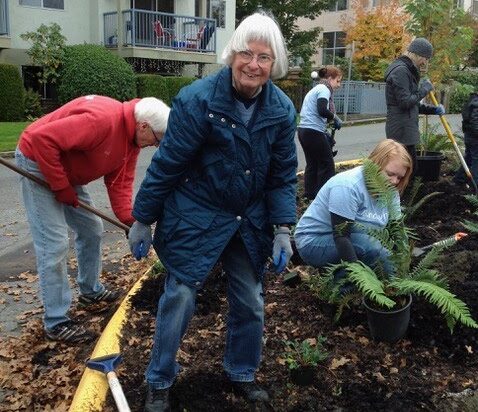
Quakers are known for taking spirit-led action to address the ecological and social crises of the world, emphasizing Quaker process and testimonies. At Fern Street meeting, with leadership from our Ecology Group, we have cared for the earth in our gardening at the Meeting House.
We have entered into a Land Care Agreement with a local habitat trust society in which we pledge as follows:
This Meeting will strive to protect nature and care for our land:
maintain abundance and diversity of native plants
give preference to plants with little need for watering and produce food
compost and mulch to build the soil & conserve water & irrigate efficiency
garden without synthetic fertilizers or toxic chemicals
maintain the beauty and utility of the grounds.
Relations with First Nations Working Group (RFNWG)
We have an active working group that researches the local history of the region; works with local First Nations groups to further our community’s knowledge and understanding; and actively participates with other interested faith groups around issues of social justice for First Nations’ peoples.
Canadian Yearly Meeting (CYM), our national organization, has sent out questions (queries) about how Quakers can become involved in the Truth and Reconciliation process.
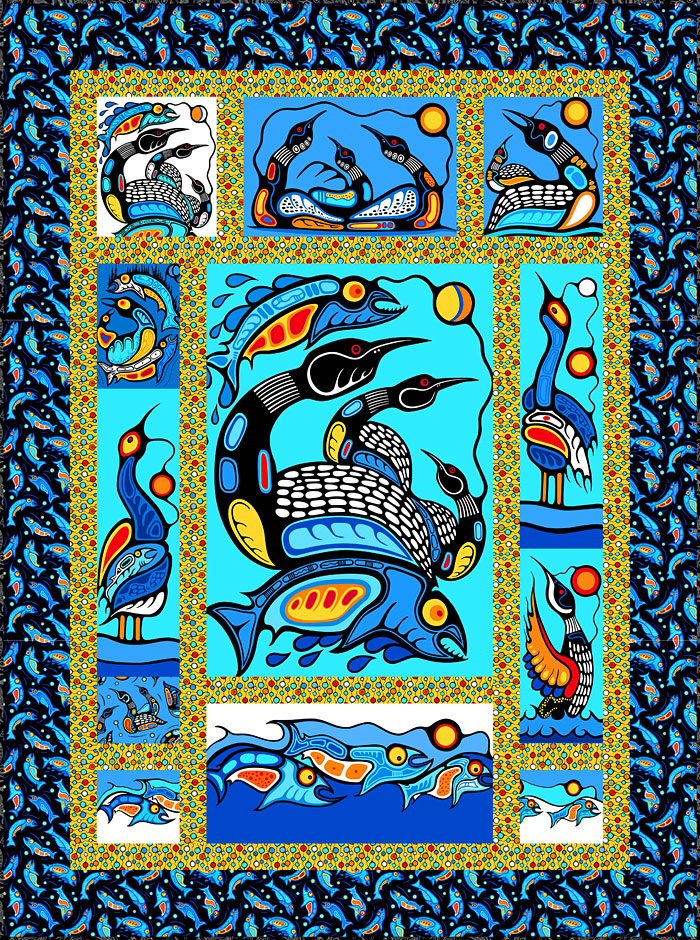
“Healing Blue Water” quilt by Norfolk fabrics
HIV/Aids and Africa
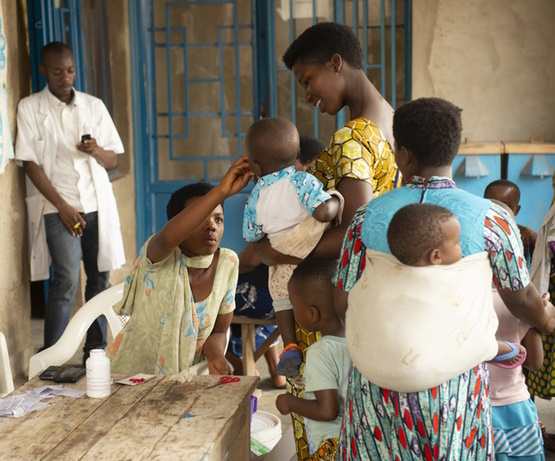
Using funds from the Crystal Kleiman bequest, between 2015-2018, VIMM Friends partnered with American Quakers to help fund a community healthcare center in Burundi.
Our partnership with the Friends Women’s Association of Burundi and their work at the Kamenge Clinic with HIV/AIDS patients reminds us of our Quaker commitment to seek social justice, peace, and, as our founder George Fox believed, that of God in everyone.
Women’s nursing station in Burundi
Parfait’s visit with our Meeting
We were delighted to have Parfait Ntahuba (the coordinator of the Burundi Friends Women’s Association) visit with us and we maintain a financial and supportive relationship with the project, as they do with us.
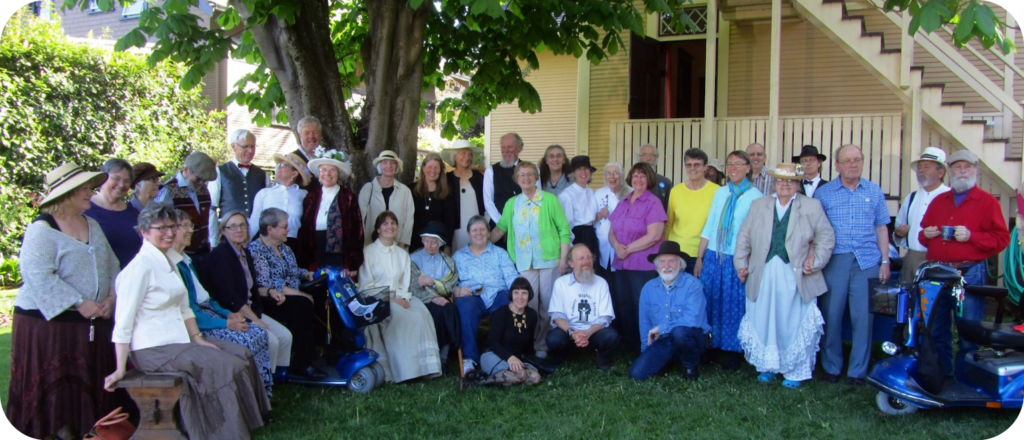
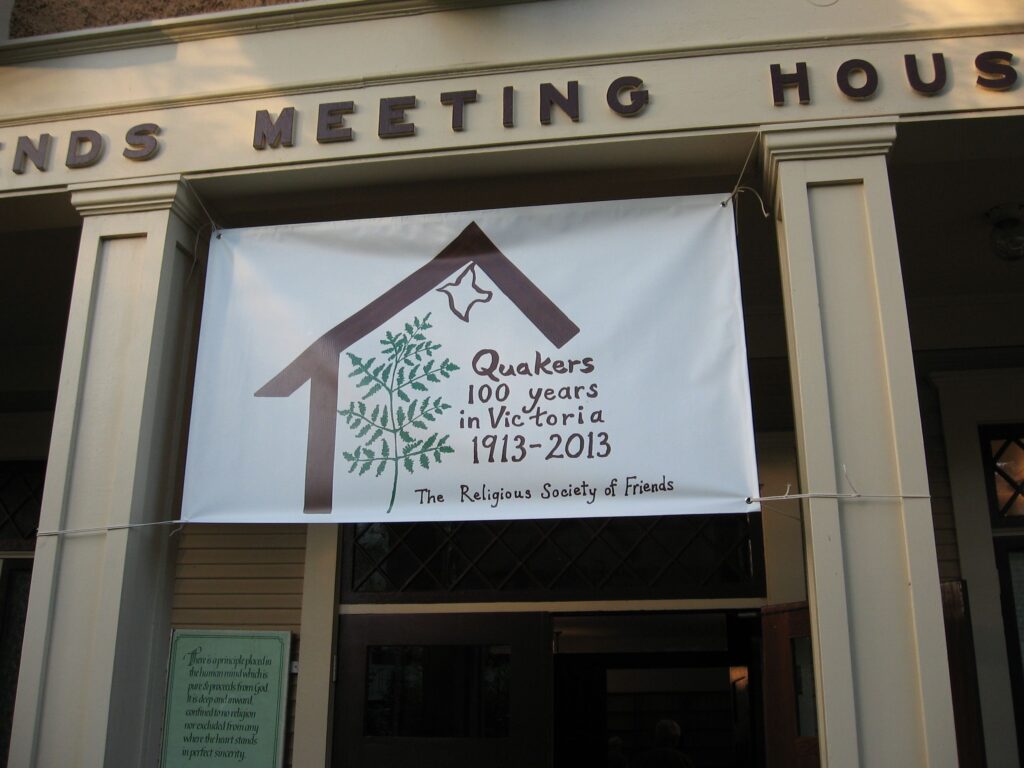
Centennial Celebration in the Backyard 2013 (Caption)
Early History
A Quaker presence in the province of British Columbia goes back to before the province even joined the rest of Canada in 1871, when it was still a British Crown Colony. On January 21, 1860, a Quaker Meeting was reported in the Daily British Colonist: “Mr. Lindsay, and lady, members of the Society of Friends, celebrated Divine Worship in the large room of the Treasury at New Westminster, on last Sunday morning. For the most numerous assemblage that ever met there for religious purposes . . .”
The December 11, 1898 Victoria Daily Colonist carried an announcement under the religious notices: “The Society of Friends, commonly known as Quakers, hold their customary services this morning at the A.O.U.W hall.” Victoria Meeting came under the care of the Yonge Street (Toronto) Quarterly Meeting and Canada Yearly Meeting in 1907. The first meeting after being sanctioned welcomed Lady Dorothea Gibbs of Wimbledon, England, who presented the group of 12 with a collection of books to create a library, which continues to this day. Meeting was held in various downtown halls, members having to contend with inconveniences such as leaky pipes and noise from an adjacent creamery.
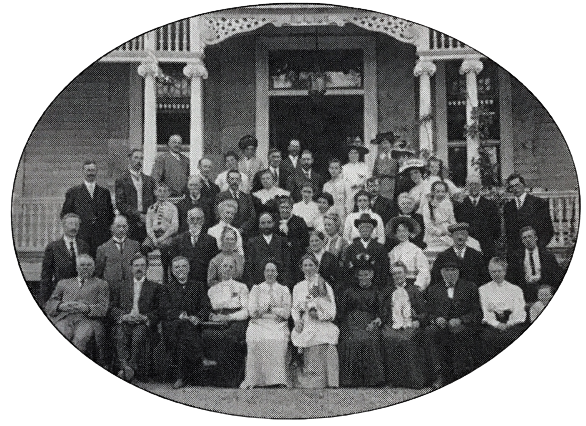
Victoria Friends meet in the Burleith Mansion in 1911
A Meeting House
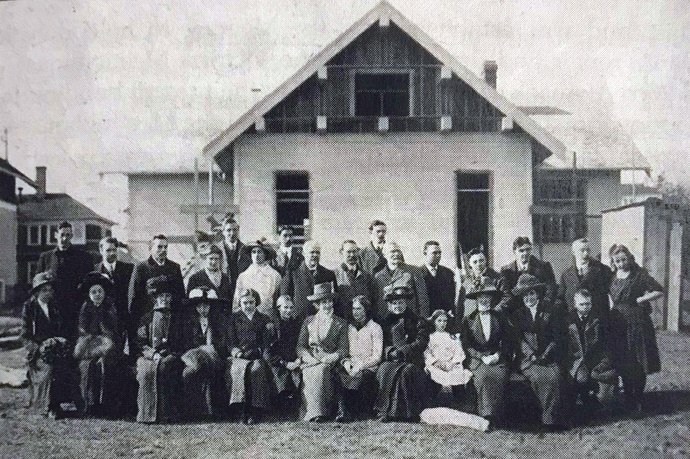
The need for more permanent quarters became an issue as membership grew. In March 1909, a committee was struck “to inaugurate a scheme forthwith with the object of raising funds for building a Meeting House.” Letters of appeal were sent to Britain, Ireland, the USA, and Eastern Canada. The location of a suitable site, a long double lot priced at $3000, gave urgency to the fundraising; however, money was scarce during the hard economic times.
First Meeting for Worship in the new Meetinghouse
Victoria Friends Meeting: a History 1907-1988
We are considering a project to digitize this well-researched booklet.
Arts and Crafts design
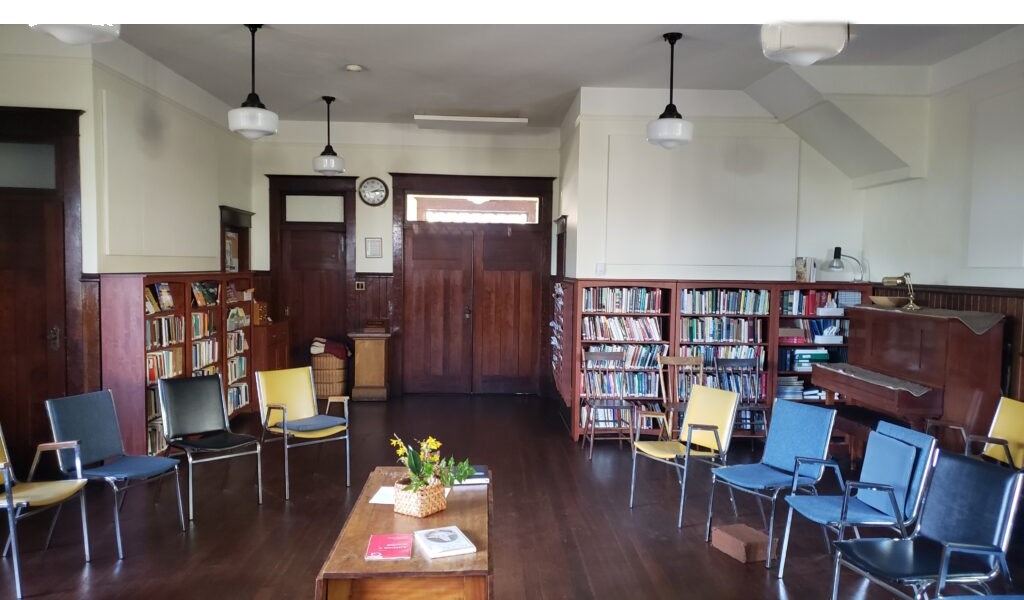
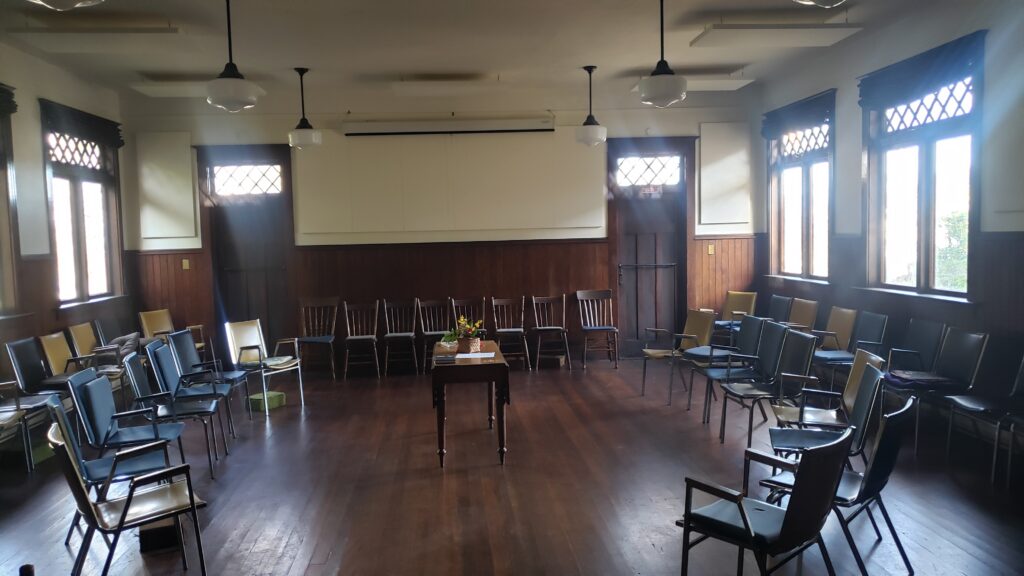
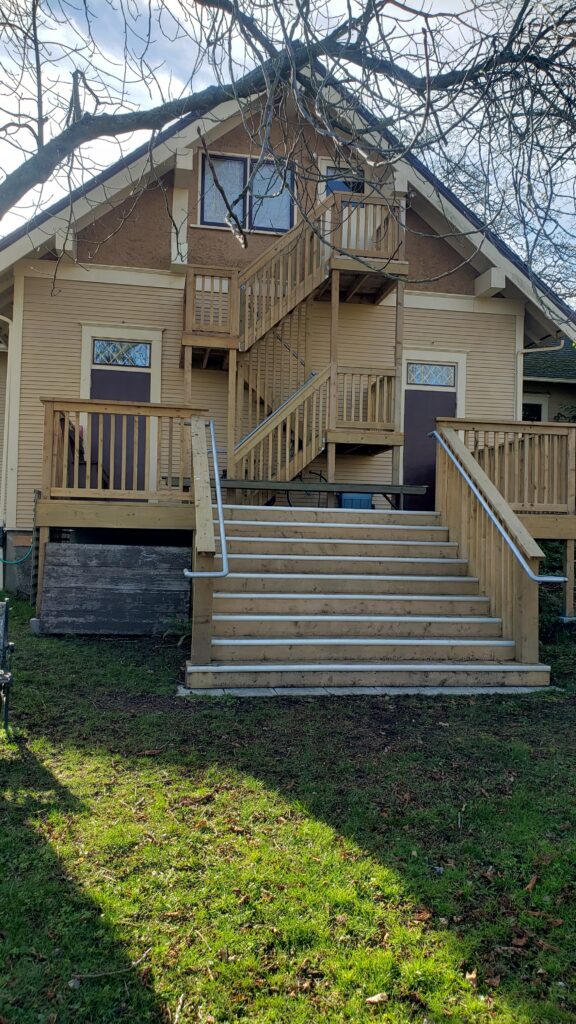
Like many residences constructed at that time, the Meeting House displays elements of Arts and Crafts design, with a deep gabled porch flanked by extensions out on either side. A caretaker apartment, cloakroom, office, and reading room were included, and the main hall at the rear, 25×35 feet, facing east. With its dark fir floors and wooden wainscotting the room is warm and welcoming. Originally fitted with a raised platform (for elders) and wooden benches, the space is now furnished more flexibly with a variety of chairs, which can be stacked against the walls to accommodate other groups who use the hall during weekday evenings.
British Friends raised £428, with a promise of more to come. A local Friend, Henry Clark, who happened to be a civil engineer (he had designed bridges in Japan), drew up building plans. Another friend, Alex Ingram, a carpenter, would supervise construction. With sufficient funds and a mortgage obtained, ground was broken in February 1913, with Friends largely contributing the design and labour. The official opening of the first purpose-built Quaker Meeting House in the province was celebrated in July of that year.
The Meetinghouse has been designated as a Heritage house.
Meetinghouse Changes
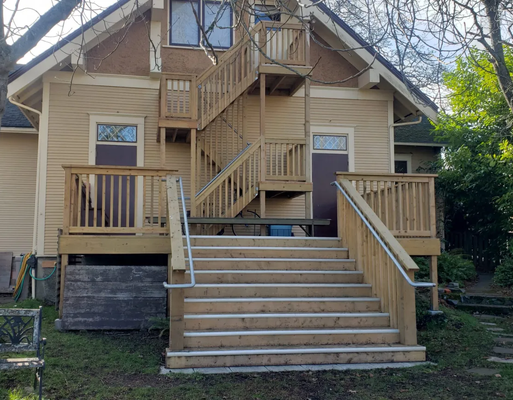
Over the years, the Meeting House on Fern Street has undergone changes to fit our needs. Wood heating gave way to oil in the 1960s, later replaced by electric baseboards with thermostats in each area. The caretaker suite was enlarged. The attic was finished to create rooms for the children’s programme, the storage of archives, and a meeting space. .
The outdoor area was beautified primarily with indigenous plants and trees, the landscape changing over the years. The front is shaded by a magnificent Garry oak, while the backyard features a huge chestnut tree, planted many years ago by young Friends. The city of Victoria leases the back portion of the property for a park, and recently the city worked with Friends to help create a new Native Plant garden in the park. The Meetinghouse has now been designated as a City of Victoria Heritage building.
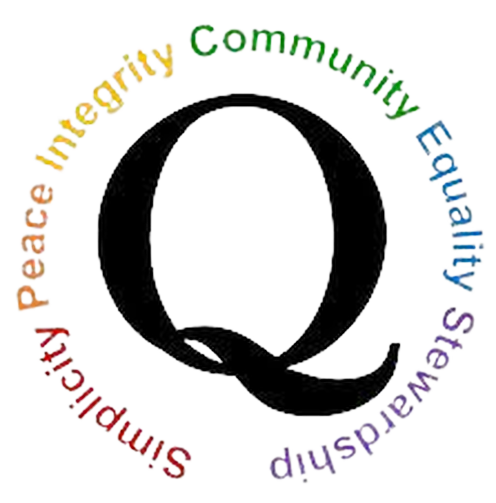
A testimony is the shared expression of belief and action characteristic of Friends. New testimonies emerge over time to meet new revelations (currently, for example, on sustainability and ecology). Presently, the major testimonies are on Integrity, Equality, Community, Simplicity, Peace, and Sustainability/Ecology, explored below.
Truth and integrity:
From the beginning Quakers believed that each person should search for truth in every aspect of life. Truth can be found by looking inward to the Light that is within all people. We must be true to our innermost sense of spiritual harmony. Integrity calls for authenticity in all our interactions with others. Integrity means upholding the truth in all our dealings.
Equality and community:
The Quaker testimony to equality stems from the conviction that all people are of equal spiritual worth. This was reflected in the early days of Quakerism by the equal spiritual authority of women, by the recognition of the equality of all races, and by the refusal to use titles that recognised social distinctions. Being a part of the Society of Friends means a commitment to attend Meeting, to sit in silence with friends, to take part in other activities and support members of the community. The Meeting has no clergy nor any formal hierarchy. Each person is equal and has the responsibility to be active members in the Meeting.
Simplicity:
The testimony to simplicity was fundamental to the origin of the Society of Friends, as the founders sought to reclaim the simplicity of worship practiced by the early Christians. It is also integral to the Quaker way: our spiritual responsiveness depends on being as free as possible from dependence on material security. Quakers therefore seek to resist the temptation to define their place in society by acquiring possessions.
Peace:
The peace testimony is probably the best-known testimony, both within and outside the Religious Society of Friends. It derives from our conviction that love and interdependent equality are at the heart of existence. Again, there is no set wording, but Friends are deeply attached to the Declaration made to Charles II in 1660, which begins: “We utterly deny all outward wars and strife and fighting with outward weapons, for any end or under any pretence whatsoever.” It has been the Quaker experience over the centuries “to live in the life and power which takes away the occasion of all wars”.
Sustainability:
Quakers have a developing concern for our stewardship of the environment. For many Quakers what has been an “emerging” testimony to ecology has now become an established one, which is strongly related to, and consistent with, the testimonies of peace and simplicity.
Living our Testimonies
Quakers recognise that their testimonies go against many of the current strands of economic, social and political change. This may, therefore, mean dissenting from fundamental aspects of the contemporary social order. It means living out our testimonies so as to hold up an alternative vision of deep human fulfillment. One way of doing so is to share with one another our practice of living our testimonies in accordance with our beliefs much more openly and adventurously, in a spirit of faithful discipleship.
Vancouver Island Monthly Meeting of the Religious Society of Friends (Quakers)
General Overview
Vancouver Island Monthly Meeting of the Religious Society of Friends (Quakers) (VIMM) is one of the organizational groups of Quakers on Vancouver Island. This body is comprised of a Meeting in Victoria, a Worshiping Group in Nanaimo, and another on Zoom serving isolated Friends on the north island, on the west coast, or sojourning elsewhere in the world. Saanich Peninsula Monthly Meeting (SPMM) serves the peninsula, and Cowichan Valley Monthly Meeting (CVMM) north of the Malahat.
VIMM conducts the formal business for local Quakers – holding membership, arranging pastoral care, marriages and memorials, holding land and property, and collecting (from Friends) and distributing funds.
VIMM is a member of both Western Half-Yearly Meeting (WHYM) and Canadian Yearly Meeting (CYM – see https://quaker.ca/news-events/gatherings/), and is one of Canada’s larger Meetings.
Meeting for Worship (M4W)
Meeting for Worship is held regularly — on Sunday (often called ‘first day’) — in Victoria (Friends Meeting House at 1831 Fern Street and Zoom). The Religious Society of Friends grew from the belief that everyone has direct access to the Spirit, and that truth continues to be revealed to us from a variety of sources. All members and attenders share in the spiritual and business life of the Meeting.
Historically, Quakers were part of radical Reformation Christianity. They were inspired by the life of Jesus as shown in the New Testament. Friends rejected formal creeds. Over the last century, many Friends have explored spiritual nourishment from a variety of religious and other traditions. We continue to seek for authentic spiritual experience and to live our lives in a way consistent with it.
We encourage succinct and deepening insights, and discourage the use of prepared statements or ministry in direct response to that of others. We listen for the heart of the message (that is, ‘beyond the words or language’) and what meaning it might have for us in our own spiritual journey. Ministry may touch an individual in unexpected ways, or speak to some people meaningfully in ways that it does not speak to others.
Our Meeting is in the Quaker liberal (un-programmed) tradition – we have no pastor or spiritual director – rather we understand the Spirit moving amongst us individually and collectively. Friends worship through “silent expectant waiting” and a search for spiritual communion with the Spirit within. We often speak of a ‘gathered Meeting’ by which we mean that there is a sense of unity in the depth of worship amongst us. Meeting for Worship takes place centred in silence. The silence is broken only when someone feels moved by the Spirit to share some deep insight with the rest of the Meeting.
Everyone is welcome to worship with us – come as you are. Meeting for Worship itself lasts for about one hour, and there is fellowship afterward.
Final Designation Forms
M&C encourages Friends to prepare (and periodically update) their final designation forms (containing their wishes for a memorial, location of will, etc.). The forms are available from M&C or the website (link), and when completed and submitted are held in confidence.
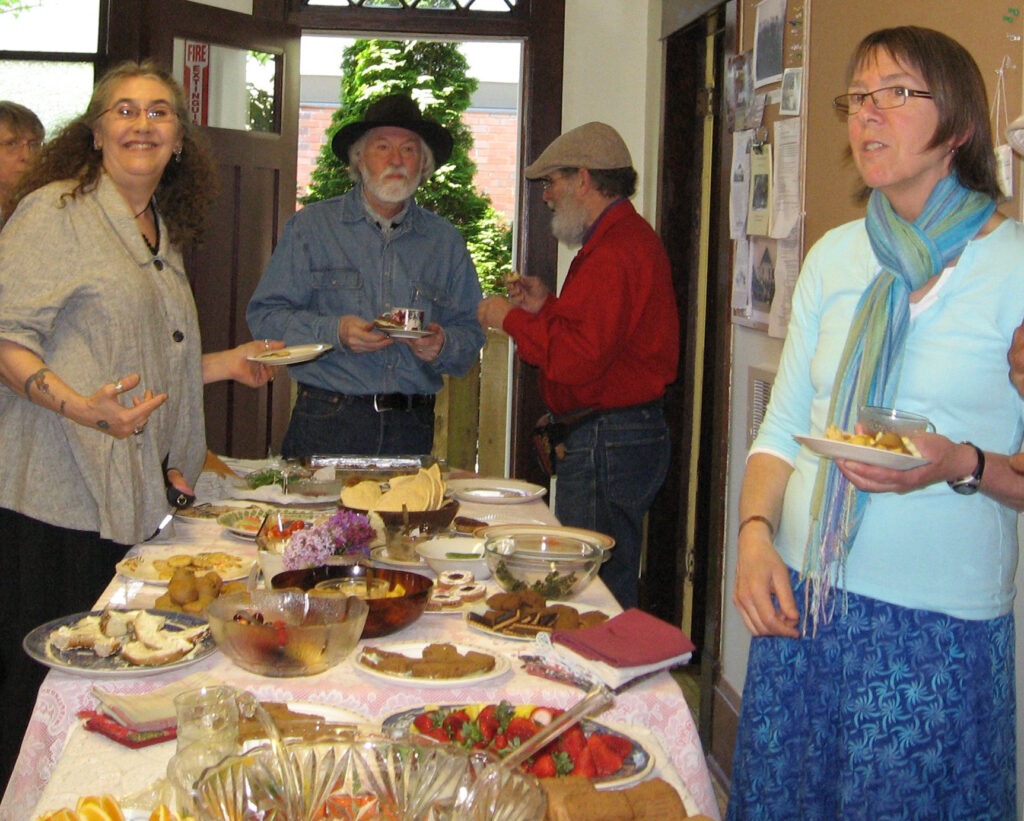
Centennial potluck in the kitchen
Living Our Beliefs or Testimonies
Quakers recognize that their testimonies go against many of the current standards of economic, social, and political change. This may, therefore, mean dissenting from fundamental aspects of the contemporary social order. It means living out of our testimonies so as to hold up an alternative vision of deep human fulfillment.
Young Friends (YFs)
We value the presence of young friends in our midst. We also recognize the particular pressures of time commitments to school and work, and that these can make for difficult regular attendance at Meeting. We try to particularly support young friends’ travel to attend WHYM and CYM gatherings so that they may share their experiences with other young friends. We also encourage their connection to friends through email, and other electronic networks.
Meeting for Worship for Business (M4W4B)
Most of the actual work of the Meeting is done by committees or individual experienced Friends, which report as needed to Meeting for Worship for Business.
Decisions affecting the spiritual and business concerns of the Monthly Meeting are made here. Members and attenders may contribute and decisions are sought with Divine guidance, resulting in a unified “sense of the Meeting”. The Clerks discern the sense of the meeting and when it is reached. This is then written into a Minute (by the recording clerk), tested with the Meeting, and (usually) approved after minor edits.
Vancouver Island Monthly Meeting holds a Meeting for Worship for Business each month (except for July and August). All members and attenders are invited to attend, usually after Meeting for Worship on a Sunday. Quaker discernment and decision-making is an important aspect of our faith.
Membership
Membership in VIMM implies and provides a reciprocal relationship with the meeting; a mutual caring for, and belonging to, a shared spiritual community. Attenders who wish to move into a closer relationship with the Meeting are asked first to talk to experienced Friends in their Worshipping Group about membership. Then, when they feel ready, they should write a letter to the VIMM Clerk requesting membership. (See link for the procedure.)
Experiencing Quaker discernment and decision-making through M4W4B is an important aspect of our faith, and should be a part of the journey into membership.
Ministry & Counsel (M&C)
M&C is responsible for the spiritual and pastoral care of the Meeting. In Victoria and other Worshipping Groups, members of M&C or other designated individuals provide Pastoral Care and Memorial services.
Any member or attender who wishes support or care is welcome to bring the concern to any member of Ministry and Counsel. Such concerns are held in confidence, unless the member/attender wishes otherwise. M&C would appreciate a written request which outlines the nature of the requested support.
The following types of committees, while often initiated by an individual, are usually appointed by Ministry and Counsel:
A Clearness Committeeis initiated by the individual, who approaches their M&C with a concern or problem that necessitates a decision. When the decision is reached, the work of the Committee ceases.
A Clearness Committee specifically for marriage or membership is initiated by written request to the VIMM Clerk and appointed by M&C. Applicants should be aware that a Clearness Committee may take a long time (6 months or more), and should not be rushed. Wedding dates should not be set until the Clearness Committee process is finished.
A Committee of Care may be initiated by either the individual or by Ministry and Counsel to give continuing support to the person in an undertaking (such as an appointment with weighty responsibilities), or progressing through a specific situation (such as a bereavement, illness, divorce, approaching death).
A Committee of Oversight, though rare, would be initiated by the Meeting, when they discern that activities taken in the name of Meeting must be safeguarded.
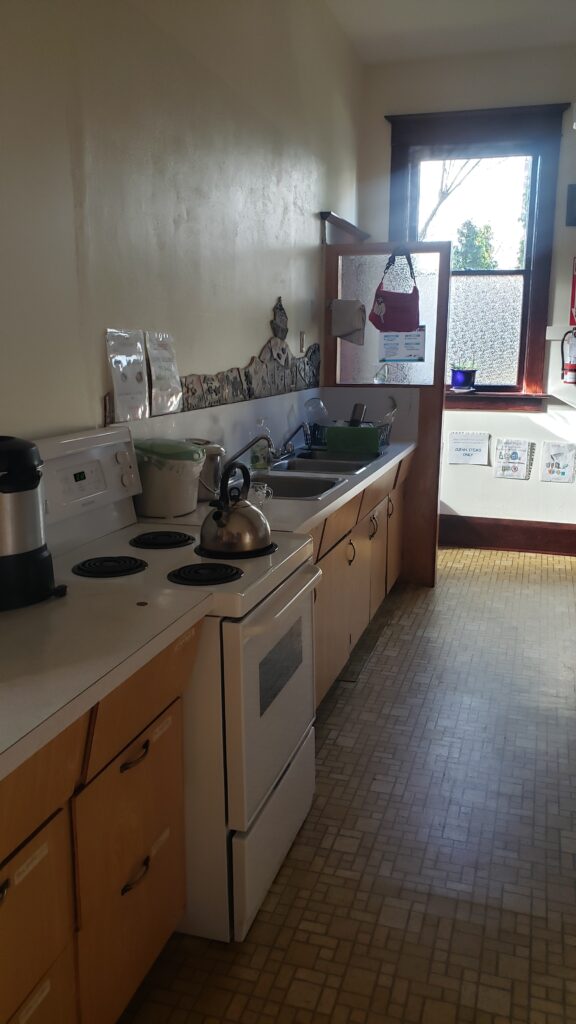
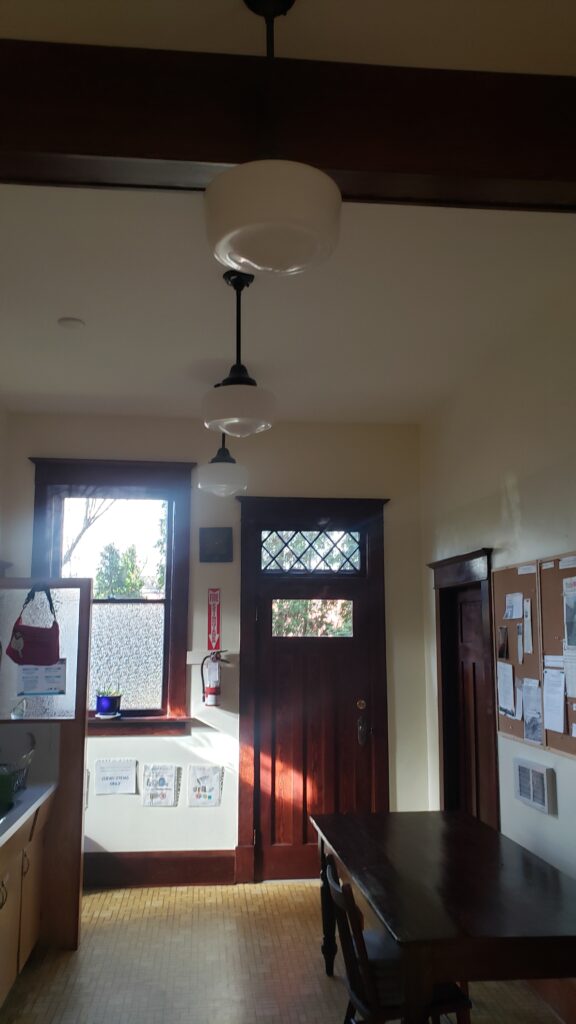
The main meeting room and the attached simple kitchen are available for rent to individuals and non-profit groups. The meeting room has recently been acoustically re-engineered to make it an ideal venue for presentations and discussions. The maximum capacity of 94 is determined by fire regulations.
Through our partnership with the Habitat Acquisition Trust, we have agreed on guidelines for the long-term care of our garden.
Our Garden: Working with Habitat Acquisition Trust (HAT)
We also have a lovely garden.
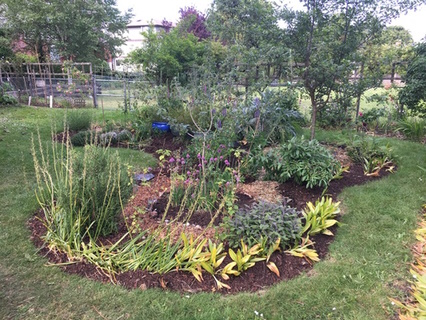
We have an agreement with the Habitat Acquisition Trust (HAT), that we tend for the grounds in an organic and ecological manner. We have developed thicket areas of local native plants, particularly plants of Garry Oak woodlands and meadow, our most endangered local ecosystem. Our resident Friend, Gerald Harris along with the Eco Group, has written a book documenting the native plants in our garden and their traditional uses.
We have developed a permaculture demonstration bed, a fruit tree guild, in which the plants benefit one another without cultivation. It sustains itself and gives us fruits, herbs, and flowers.
We have greatly increased the food production of our grounds: tree fruits, berries and vegetables. We supply flowers for the Meeting House almost entirely from our garden. By composting, shredding, and mulching, we put all prunings, weeds, leaves, and other garden materials back into the soil. We are developing a more efficient irrigation system with a long-term aim of converting to rainwater irrigation.
We have greatly increased the food production of our grounds: tree fruits, berries, and vegetables. We supply flowers for the Meeting House almost entirely from our garden. By composting, shredding, and mulching, we put all prunings, weeds, leaves, and other garden materials back into the soil. We are developing a more efficient irrigation system with a long-term aim of converting to rainwater irrigation.